BIM
Connected Places Catapult hosts TransiT workshop on federating transport digital twins
Around 50 industry guests joined the fourth Connected Places Catapult workshop for the £46m research hub to identify barriers and draw up recommendations for linking digital twins across road, rail, air and maritime.
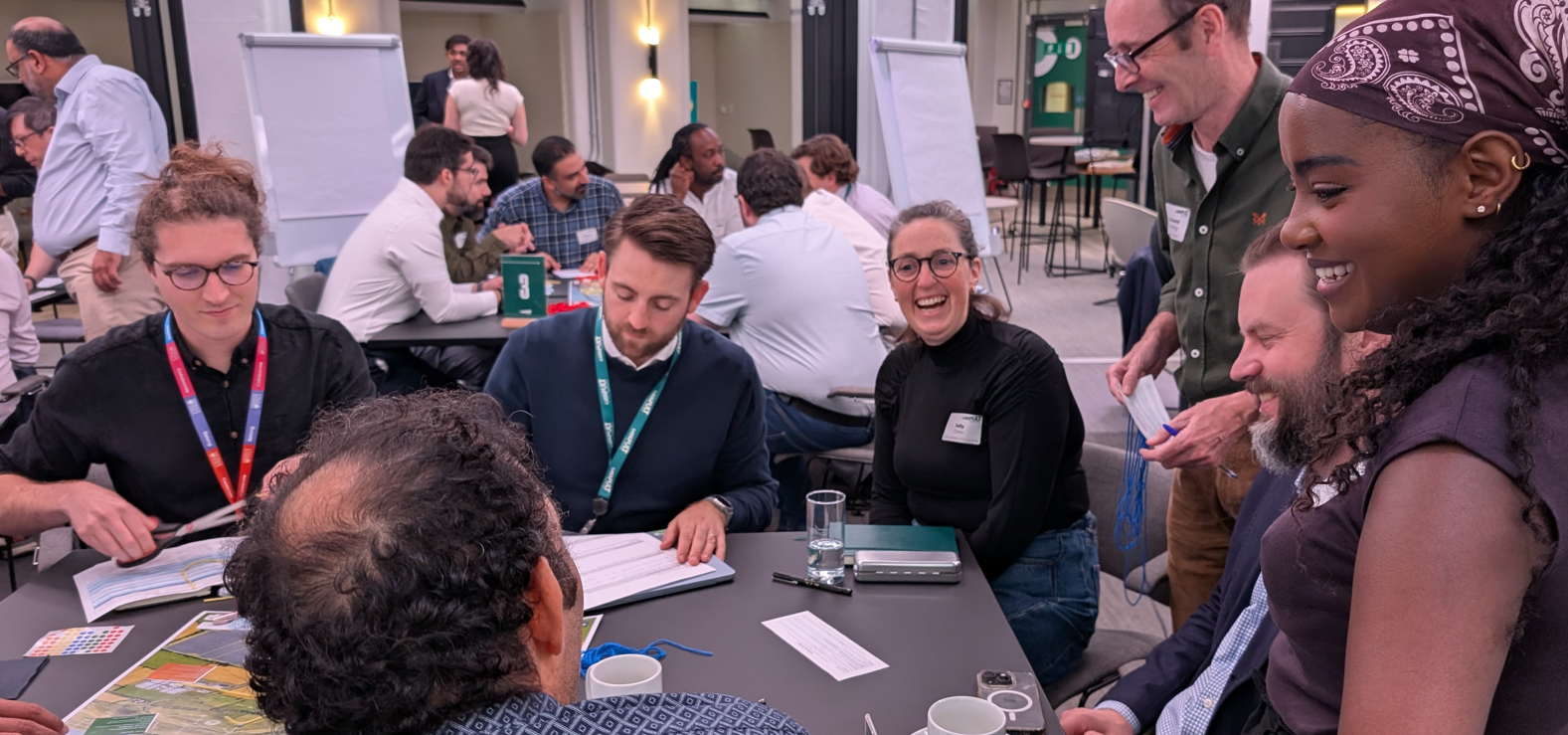
Around 50 industry guests took part in a Connected Places Catapult workshop for the TransiT research hub on federating transport digital twins, the fourth and final session in a series announced in May 2026.
The event, Designing for federation in digital twinning for transport, was reported by the Digital Twin Hub on 21 October. According to the Hub, the workshop heard that digital twins which work together reliably, safely and at scale will play a vital role in decarbonising UK transport.
Ali Nicholl, Data & Digital Strategic Engagement Director at Connected Places Catapult, opened the event. "Federation is a way for organisations to connect digital twins, models and data, but keep their own systems and information independent," he said.
Connected Places Catapult's own event page said the day was set up to gather practical experience, identify barriers and opportunities, and develop recommendations for digital twin federation in UK transport. The Catapult noted that rail, road, aviation, maritime and logistics may each face distinct technical, operational and organisational challenges in federating their twins.
The research question
TransiT's remit, as the Digital Twin Hub described it, includes linking digital twins of different transport modes into federations covering road, rail, air and maritime, across both passenger and freight. TransiT itself calls the target network a Federated Transport System of Systems.
Dr Michele Sevegnani, Reader in Computing Science at the University of Glasgow, leads TransiT's research on federated digital twins. "This makes interoperability, supported by clear and enforceable data-sharing contracts, one of the central challenges in digital twinning for transport," he said.
Dr Theodore Lim, a TransiT co-investigator and systems engineering expert at Heriot-Watt University, led a workshop game on the complexities of connected twins. He said the goal was a resilient system rather than simply the most connected one.
Professor Adam Sobey, Mission Director for Sustainability at The Alan Turing Institute, gave the keynote. Panellists included Katrina Thompson, Director of the UK Digital Twin Centre, and Aditya Sivanand, Principal Data Scientist at the Department for Transport.
The hub and its funding
TransiT is jointly led by Heriot-Watt University and the University of Glasgow with six other universities, and is supported by the Engineering and Physical Sciences Research Council (EPSRC) and the Department for Transport. The Digital Twin Hub and TransiT put the industry membership at almost 70 partners; UK Research and Innovation (UKRI) and Heriot-Watt give a figure of 67.
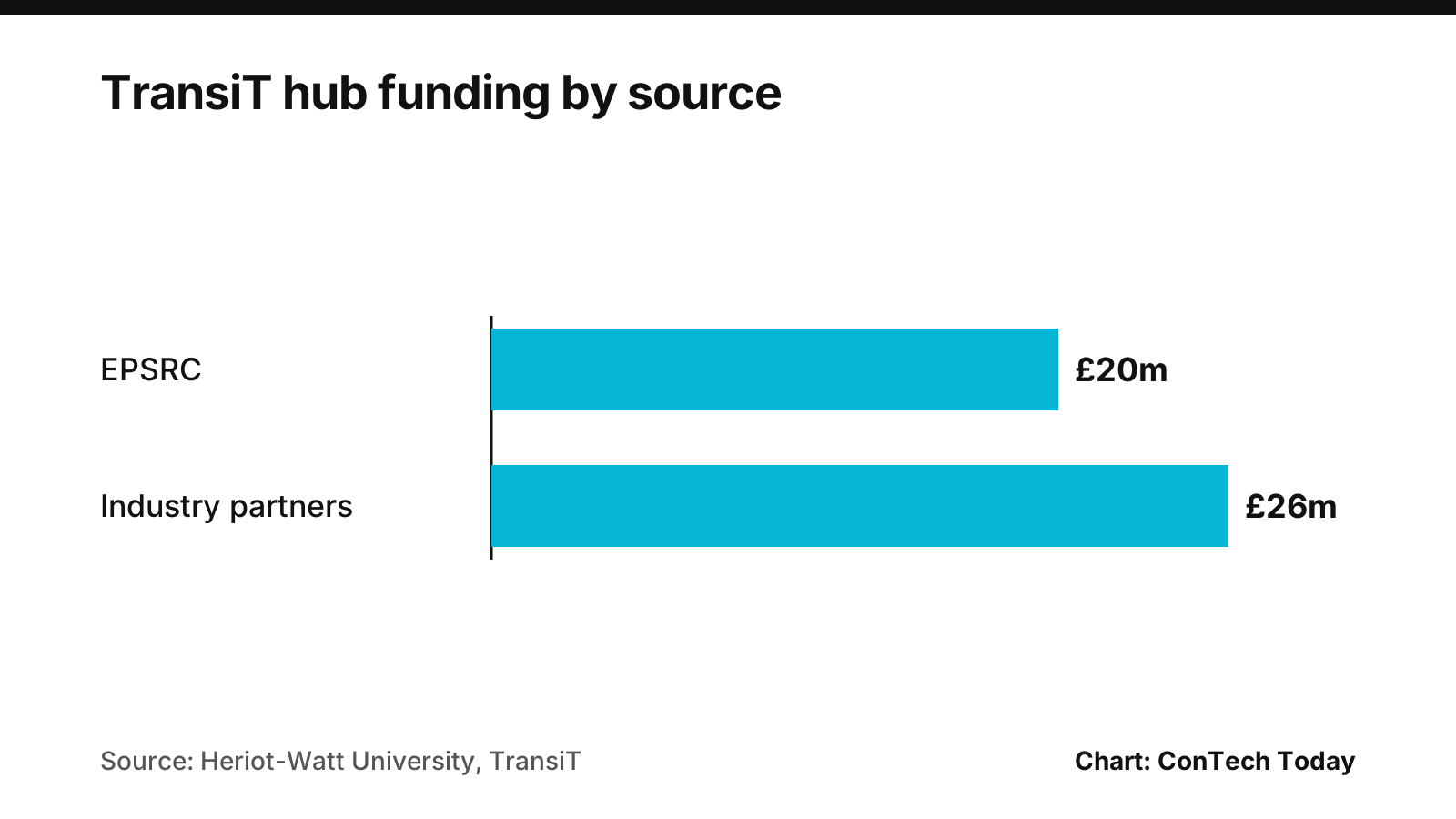
Heriot-Watt announced the £46m hub on 12 August 2024. According to the university and TransiT, EPSRC provides £20m and stakeholders across the digital, energy and transport sectors another £26m. UKRI describes the total as a £46m investment from EPSRC and 67 partners.
| Funding source | Amount |
|---|---|
| EPSRC | £20m |
| Industry partners | £26m |
UKRI's partner list includes National Highways, Network Rail, Transport for London, Costain, Mott Macdonald, WSP, Siemens Mobility and Bentley Systems. Heriot-Watt said the partner universities will fund 18 PhD students, and that Glasgow is responsible for digital twinning and cyber physical systems within the hub.
The hub's stated aim, according to Heriot-Watt, is to identify the lowest cost, least risky and most energy-efficient way to decarbonise transport. Professor Phil Greening of Heriot-Watt, joint director of TransiT, told UKRI that transport accounts for about a third of UK carbon emissions.
What happens next
When TransiT and Connected Places Catapult announced the workshop series in May 2026, they described the events as working sessions rather than conferences. Justin Anderson, director of data and digital at the Catapult, said at the time that TransiT provides the evidence needed to shape national policy.
Both organisations said the outputs from each workshop, including the recommendations from the federation session, will be captured and shared more widely.
On the record: UK Research and Innovation, Department for Transport, Costain, Mott Macdonald, WSP
Sources
- Digital Twin Hub (opens in a new tab) (accessed 2026-10-21)
- Connected Places Catapult (opens in a new tab) (accessed 2026-10-21)
- TransiT (opens in a new tab) (accessed 2026-10-21)
- TransiT (opens in a new tab) (accessed 2026-10-21)
- Heriot-Watt University (opens in a new tab) (accessed 2026-10-21)
- UK Research and Innovation (opens in a new tab) (accessed 2026-10-21)
This story was researched from the primary sources above and checked against them before publication. Spotted an error? Tell us and we will correct it promptly.