adoption
Governance and data standards, not technology, hold back transport digital twins, Catapult finds
A Department for Transport-commissioned report from Connected Places Catapult finds UK transport digital twin adoption uneven and still largely at pilot stage, with fragmented governance and inconsistent data standards the main barriers.
Connected Places Catapult has published a Department for Transport-commissioned assessment of digital twin maturity across UK transport, finding that governance, data standards and procurement, rather than technology, are holding back adoption at scale.
The Digital Twins: State of the Nation Report, which the Catapult describes as the first comprehensive assessment of digital twin maturity across the UK transport ecosystem, concentrates on network management and crisis response. It covers regional capabilities, market readiness, international best practice and the actions needed to speed up adoption.
The Catapult's own report page is dated 29 September 2026. The Digital Twin Hub, which moved from the Centre for Digital Built Britain to Connected Places Catapult from 1 April 2022, carried the same text in an article dated 13 October 2026.
The findings
According to the Hub article, the UK has recognised strengths in aviation, traffic management and urban mobility. It names the West Midlands, Greater Manchester and London as regions already moving beyond experimentation and embedding digital twin approaches into current transport operations.
Elsewhere the picture is patchier. The report finds adoption uneven across the UK, with many initiatives still at pilot stage.
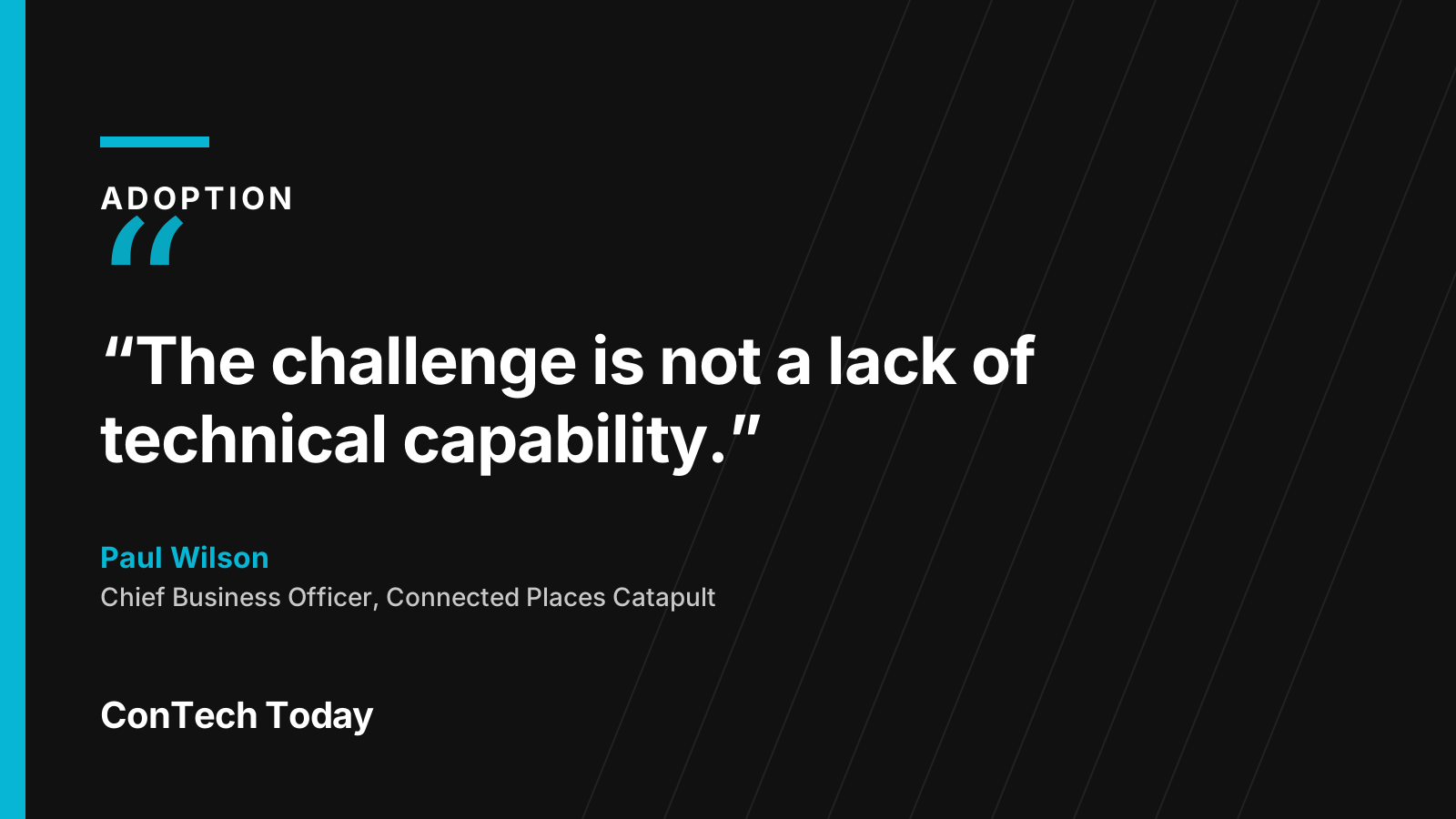
"The challenge is not a lack of technical capability," the Hub article said. Instead, the report identifies fragmented governance, inconsistent data standards, limited interoperability, procurement challenges and uneven organisational capability as the key barriers preventing digital twins from being adopted at scale.
The market
The report puts global demand for transport digital twin solutions at about £9.5bn in 2025, and forecasts growth of about 15% a year. On that basis it says the UK is positioned to benefit from both domestic adoption and export opportunities across rail operations, ports, freight logistics and cross-modal resilience.
The full report is available as a PDF download from the Catapult and the Hub. The Hub article lists its contents as including regional capabilities, the role of digital twins in network management and crisis response, market readiness and recommendations for accelerating adoption.
Background
The Department for Transport (DfT) defines a digital twin as a digital representation or model of a physical system such as a road network, vehicle or tunnel.
The new report builds on earlier DfT-backed work. In 2024 the department published an economic benefits analysis that put the overall benefits of an integrated network management digital twin at about £850m present value over a 10-year appraisal period. Among the benefits it listed was supporting better responses to incidents or emergencies, the crisis response theme the new report picks up.
Before that, in June 2023, the transport minister launched the Transport Digital Twin Vision and Roadmap to 2035 at the inaugural Connected Digital Twins Summit. The Catapult developed that roadmap for DfT's Transport Research and Innovation Board. It covered four areas: strategy and innovation; enabling environment; people, skills and culture; and technology and data.
At the 2023 launch Paul Wilson, chief business officer at Connected Places Catapult, said the roadmap showed how the sector could "go from pockets of excellence with this technology" to wider use.
The Catapult supports DfT's innovation and research and development activities through a collaboration agreement, and says it has delivered more than 100 projects with the department since the collaboration began in 2013.
The Digital Twin Hub itself was launched by the Centre for Digital Built Britain in March 2020 as part of the National Digital Twin programme. By March 2022 its membership had grown from six founding members to more than 3,500 individuals.
On the record: Department for Transport
Sources
- Digital Twin Hub (opens in a new tab) (accessed 2026-10-13)
- Connected Places Catapult (opens in a new tab) (accessed 2026-10-13)
- Department for Transport (GOV.UK) (opens in a new tab) (accessed 2026-10-13)
- Connected Places Catapult (opens in a new tab) (accessed 2026-10-13)
- Connected Places Catapult (opens in a new tab) (accessed 2026-10-13)
- Digital Twin Hub (opens in a new tab) (accessed 2026-10-13)
This story was researched from the primary sources above and checked against them before publication. Spotted an error? Tell us and we will correct it promptly.